Introduction to Tiny Houses
Design for disaster or lifestyle.
Architects design both permanent and temporary dwellings and structures. Tiny Houses can be both.
The Bega Valley has had its share of natural disasters in the last few years. We have seen floods, storms, high seas and raging bushfires. Wherever people live, they are vulnerable to the ravages of nature. The impact of wind, fire, rain and earthquakes shake the foundations of our communities. All the images below are from our local areas. They all happened fast but the fallout of these events lingers on. Disasters can cause displacement of the local population, and the provision of permanent or temporary housing can be difficult.


Think big !
Design Tiny.
Tiny Houses provide small-footprint, low-cost, accessible housing.
Research and design your own low-cost, resource-efficient Tiny House which could be used for displaced people or anyone who wants to live there permanently. Research the most efficient use of local materials and environmental conditions to create low-cost, energy-efficient sustainable housing. You will need to submit a range of presentation drawings, a documentation folio and, optionally, a 3D model of your design.
Research and design your own low-cost, resource-efficient Tiny House which could be used for displaced people or anyone who wants to live there permanently. Research the most efficient use of local materials and environmental conditions to create low-cost, energy-efficient sustainable housing. You will need to submit a range of presentation drawings, a documentation folio and, optionally, a 3D model of your design.
Here's where you can start...
|
|
|
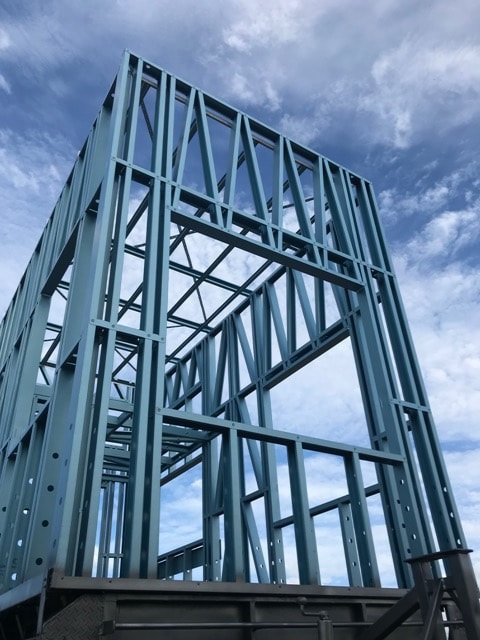
This is the basic frame you can use to design your very own Tiny House!
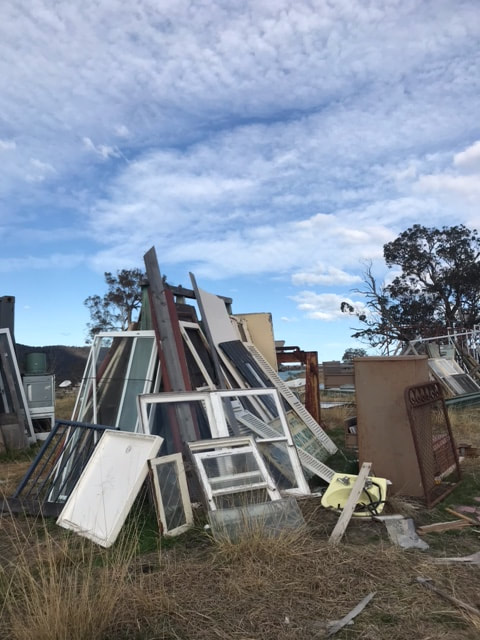
WHAT IS THE PROBLEM?Is this a pile of junk or is this your new Tiny House? We have too much stuff. Can you reuse, recycle, reduce your consumption? YES! With a Tiny House you can.
A Tiny House is a home of 40 square metres or less, either on wheels or a foundation. The layout of the Tiny House must include a bathroom, kitchen, sleeping area, living space and storage. The design should be environmentally sustainable, taking into account the use of recycled or reclaimed materials. The Tiny House may be mobile or in a fixed location, and this should be reflected in the design. The Tiny House must utilise solar energy as well as the use of tank or recycled water. |
|
STEM SOLUTIONS STEM skills offer alternative design solutions appropriate to engineered structures. Consider why you would choose a Tiny House. Would it be about:
You also use mathematical calculations to assist with the design development. STEM is providing global solutions. |
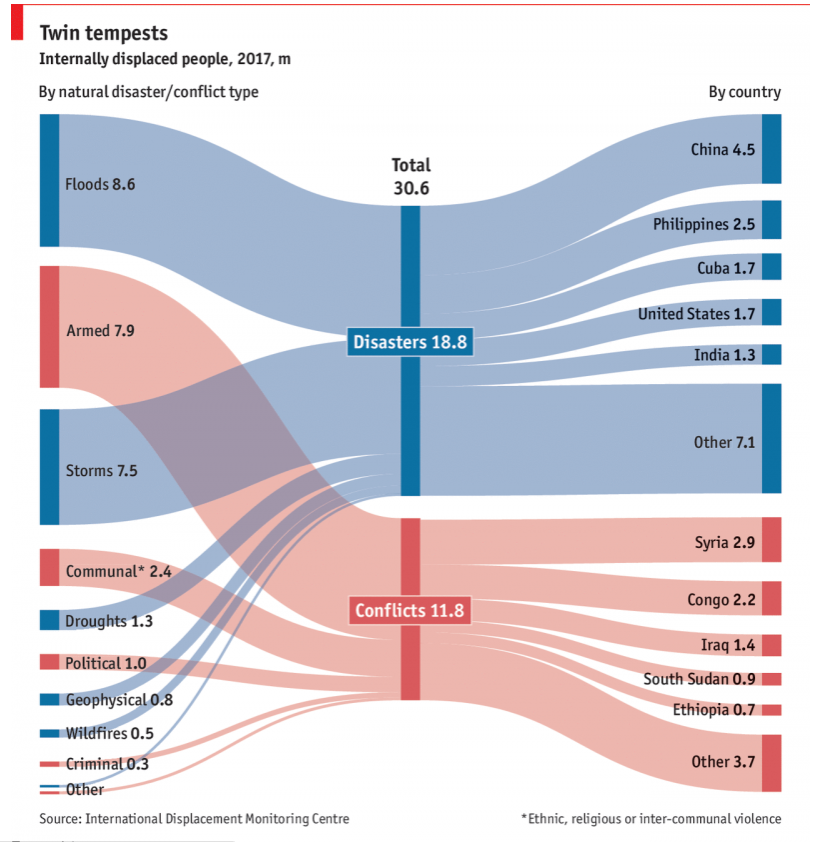
But first, let's look at the reasons people are displaced and need Tiny Houses.
|
Use the infographic to answer these questions. Answers hidden, highlight to reveal:
Use your weapon of Maths instruction!
|
Need to know more?
Click on the images and they'll take you to other stories in other places.
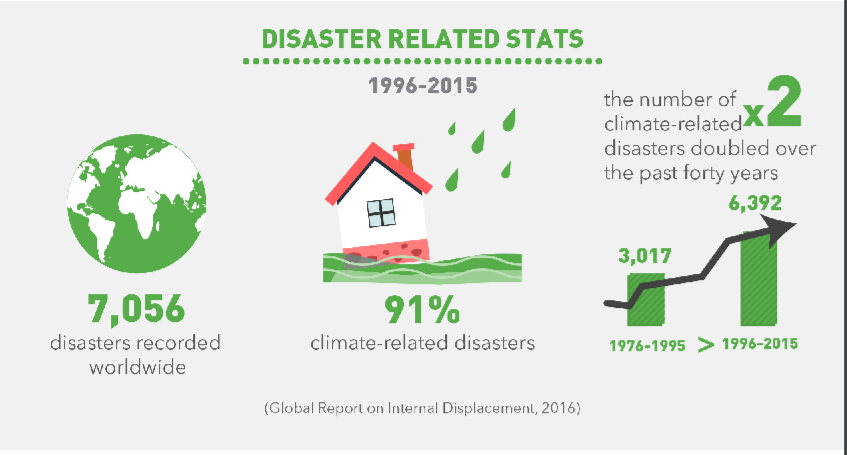
The number of forcibly displaced people has grown from 33.9 million in 1997 to 65.6 million persons in 2016 due in large part to conflicts in the Middle East and Sub-Saharan Africa. The rise in conflict globally has resulted in the occurrence of 20 displacements per minute last year and a new record high for the total number of people affected by displacement. In 2015, there were 22.5 million recorded refugees, which is roughly the population of Australia, 24% of whom were survivors of torture and/or violence.
Disasters were responsible for 23.5 million new displacements in 2016, with 97% caused by weather and climate-related events. Almost 12.9 million displacements across the globe were resultant from the impact of storms such as Hurricane Matthew, which caused over 1 million people to be evacuated in Cuba alone. More countries are participating in the United Nations High Commissioner for Refugees’ (UNHCR) resettlement programme. A total of 189,000 resettlements took place in 2016, with largest instances of programme admission coming from the U.S. and Canada. Despite the increase in resettlement quotas, there is a great gap as 1.19 million people remain in need of resettlement.
Disasters were responsible for 23.5 million new displacements in 2016, with 97% caused by weather and climate-related events. Almost 12.9 million displacements across the globe were resultant from the impact of storms such as Hurricane Matthew, which caused over 1 million people to be evacuated in Cuba alone. More countries are participating in the United Nations High Commissioner for Refugees’ (UNHCR) resettlement programme. A total of 189,000 resettlements took place in 2016, with largest instances of programme admission coming from the U.S. and Canada. Despite the increase in resettlement quotas, there is a great gap as 1.19 million people remain in need of resettlement.
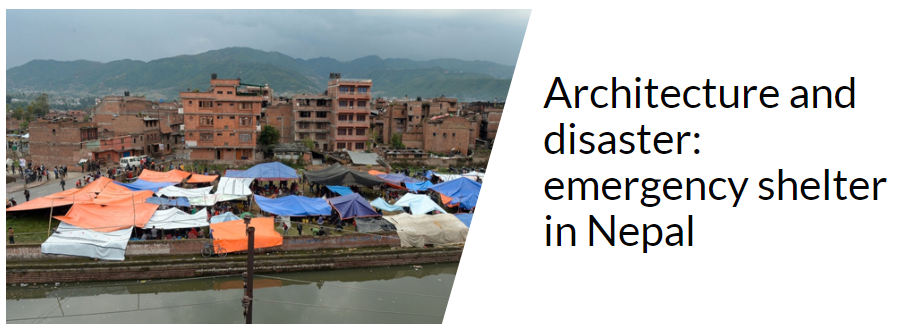
In thinking about Tiny Houses, you have just started to reflect on:
§ What are the causes of population displacement?
§ How do people use interior spaces? What are the basic functions that interior spaces need to provide?
§ How can we design spaces to be multifunctional and to efficiently use space?
§ How can we design buildings to be cost and energy efficient?
§ What mathematical and scientific knowledge is needed to assist with developing an informed design solution?
We are going to keep coming back to these questions, but take some time and think about what you have learned today and give a friend your ideas so far about one of these questions. Make sure you also listen to a friend and after they've finished talking, give them some feedback -something positive, something to improve and something interesting they have shared with you.
NEXT WEEK: Scale drawings and beginning to design your Tiny House on paper.